
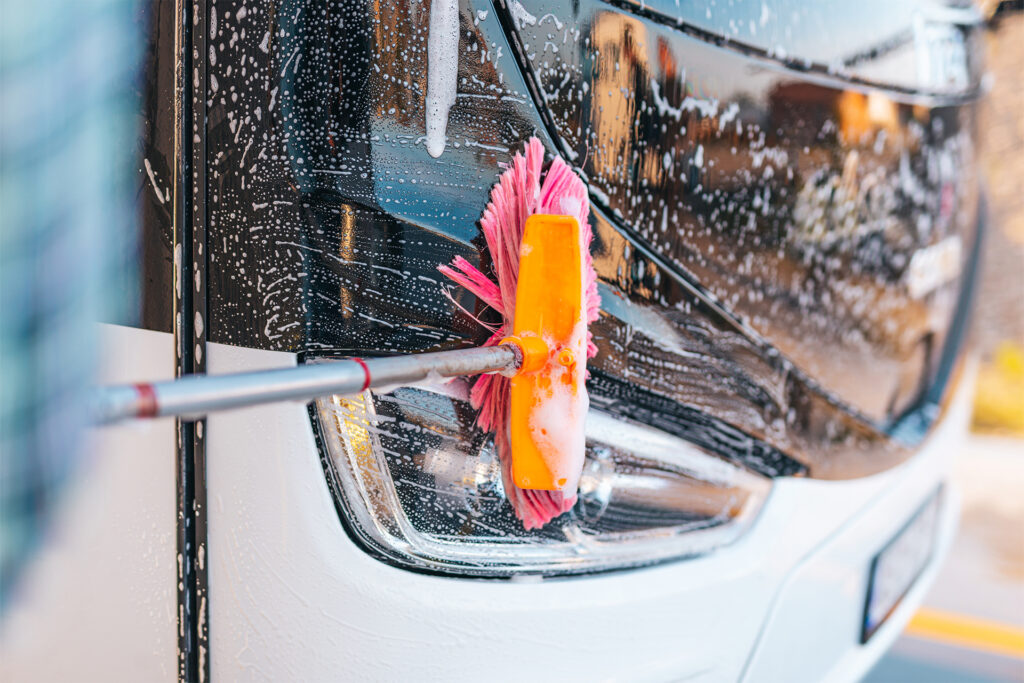
Buses are many things: major drivers of the UK economy, a sustainable mode of transport, lifeline infrastructure for millions of people, and moving advertisements to name but a few. Your fleet’s appearance, naturally, is a reflection of your brand, whether that’s a municipal bus company or a private corporation with investors on the global stage. To achieve the squeaky clean reputation you deserve means investing in upkeep, and although it sounds mundane, washing your buses is as essential as this maintenance gets.
Underpinning passenger confidence and, yes, operational efficiency itself, getting a handle on the cleaning process translates into shrinking running costs, reduced water footprints, and a gleaming fleet up to par with mandated service conditions.
Getting there, though, requires controlling logistical pressures without compromising on maintenance standards. A tall order, but this guide will support you along the way.
Contents:
- Why Regular Bus Cleaning Matters
- How Often are Buses & Coaches Cleaned?
- Health & Safety Considerations to Run Through
- The Equipment Options on the Table
- How Automation is an Efficiency Engine: Manual vs Automatic
- Bus Washing Mistake that Could Be Quietly Costing You
- Settle on the Right Solution for Your Fleet
- Conclusion: Bus Wash Systems are the Future of Transport
TL;DR
Washing buses is a maintenance essential, not just a cosmetic routine. Keep your fleet efficient, passengers happy and your vehicles durable with weekly cleaning, and drive down upkeep costs using automated bus wash systems that take less time and water.
Beyond the Cosmetic: Why Regular Bus Cleaning Genuinely Matters
Washing your fleet of buses or coaches might not sit at the top of your agenda. Indeed, it might even be nestled in amongst the lower entries of the to-do list. After all, the pressure of keeping the vehicles on the road compels you: when buses are removed from service for cleaning, there are no bums on seats, no ticket revenue to be collected.
And yet…
Pristine Buses are Conducive to Stronger Brand Reputation
A well looked after fleet projects an image of professionalism that allows trust to grow. If the exterior is filthy, you’re actively discouraging potential travellers from boarding, especially if the grime extends to the windows. That’s obscured views andpotentially even a safety hazard.
Cleanliness Informs Passenger Experience
First impressions are gold dust, yet the opinions of regular service users are arguably more important, because their repeat custom sustains the business.
Staying in their good books and bolstering your chances of maintaining and/or clinching new local authority contracts requires proper attention to detail, inside and out. Not least because cleanliness and, by extension, hygiene are more prominent in the public consciousness since the lockdown years. Case in point, as of 2022, more than half of people worry about the spread of illness on buses, according to a Transport Scotland survey.
This necessity compounds when it’s children being ferried from A to B. For school buses, the transport provider has a statutory duty to meet high standards of comfort and cleanliness, accessibility, safety and security. Fail to reach that bar and parent perceptions are damaged.
Regular Washing Contributes to Robust Vehicle Longevity
Because layers of dirt, grease and grime have an adverse effect on your mechanics. So, while unkempt fleets signal a lack of care visually, the neglected cleaning equally contributes to premature wear; typically paint damage or corrosion and sometimes even drainage issues.
And Lowers Overall Maintenance Costs
Since the muck conceals lurking problems, you may find that more frequent cleaning leads to earlier detection of leaks, damaged bodywork, cracked lights and tyre issues as you conduct daily walkaround checks – all concerns that are best addressed sooner rather than later.
How Often are Buses & Coaches Cleaned? Aim for Best Practice
Truly? There is no magic number that pertains to the exact frequency of cleaning, although most reputable bus firms clock in at once a week – that’s for the exterior. If your fleet operations are particularly fast paced, you may wish to increase this as necessary, up to daily if nothing else will suffice.
Now, what about the interiors? Best practice protocol is to give the inside a spritz after every shift, from driver cabin to the upper deck if you have them. It may seem like overkill, but this keeps your passengers safe.
Follow up this regular care with deep cleans, including attention to the underbody, to ensure your vehicles are always road ready, come rain, snow or shine.
Health & Safety Considerations to Run Through
A clean bus is never worth risking employee safety for. Every single worker deserves to feel safe on the job, no exceptions. As such, safe working practices must inform your process as a matter of compliance but also of culture. Here’s how:
- Get operators to carry out a risk assessment before cleaning – This is especially important when the work is done outside or in busy depots.
- Ensure cleaning staff are aware of all potential hazards, from the obvious (moving vehicles, slippery ground, nearby electrical equipment) to the obscure (legionella risk from dispersed droplets of old water).
- Enforced PPE, including waterproof gloves when handling detergent, eye gear to prevent chemical splashes, hi-vis clothing for visibility and waterproofing for pressure washer handling.
- A comprehensive understanding of relevant legislation, such as PUWER which applies to almost all cleaning equipment used in a workplace. Heavy mobile bus wash devices certainly fall under this remit.
- Sufficient training, so staff are aware of company policy and feel confident in their roles.
The Equipment Options on the Table
Even with a regular cleaning schedule, poor techniques and equipment can reduce the effectiveness of the wash and, worst case scenario, damage vehicle finishes. Together, these fumbles inflate maintenance costs unnecessarily.
Staying on top of expenses, quality and time constraints requires matching the correct solution to your operational DNA. Your first step can be wading through the options below.
Old School Hose, Buckets & Brushes
In all honesty, using traditional equipment such as a hose, buckets and brushes is rarely the most efficient route to a clean coach or bus in commercial contexts. The amount of staff time the process eats up would be better spent on other aspects of the business… which brings me to handheld jet washers.

Manual High-Pressure Water Jets
Ostensibly, this bus washing setup is best for micro businesses with team members you can count on your fingers. At this point in the business’ growth, the cost rarely justifies the purchase of more sophisticated tech; however, if your fleets are particularly busy, hiring a bus wash system occasionally may be beneficial, given the time savings it grants your staff.
As far as techniques are concerned, best practice methods are as follows:
Start by rinsing the roof downwards, removing loose sediment and road grime before applying detergent. Once it has had time to work, you may rinse the vehicle thoroughly, again using the jet wash, taking care to maintain a safe distance from the surface and avoid directing high-pressure water at seals and electrical components all the while.

Mobile Bus Wash Systems
Mobile bus wash systems are a flexible solution for medium to large fleets, given that they do a stellar job within 10 minutes, simultaneously relieve workers from any manual handling. Quickly paying for itself, the process unlocks significant time savings. As the machine is self-propelled, all you have to do is guide it along and the rotating brushes do all the work.
But don’t simply take our word for it. Here’s what one of our clients, Ausden Clark, had to say about our premier bus wash system, the Iteco iWash.
We purchased our Iteco iWash Brush Wash system last year, and it has quickly become an integral part of our daily operation.
From the outset, the quality of the machine has been evident. It’s robust, reliable, and consistently delivers an excellent finish across our fleet. The ease of use is a real standout feature, drivers of all experience levels are able to operate it confidently, which has removed previous barriers and made vehicle washing a straightforward, issue-free task for everyone.
The system’s efficiency has also had a noticeable impact. It has significantly reduced wash times while maintaining a high standard, and the water-saving features have supported our ongoing efforts to operate more sustainably without compromising results.
Automatic Drive-Throughs
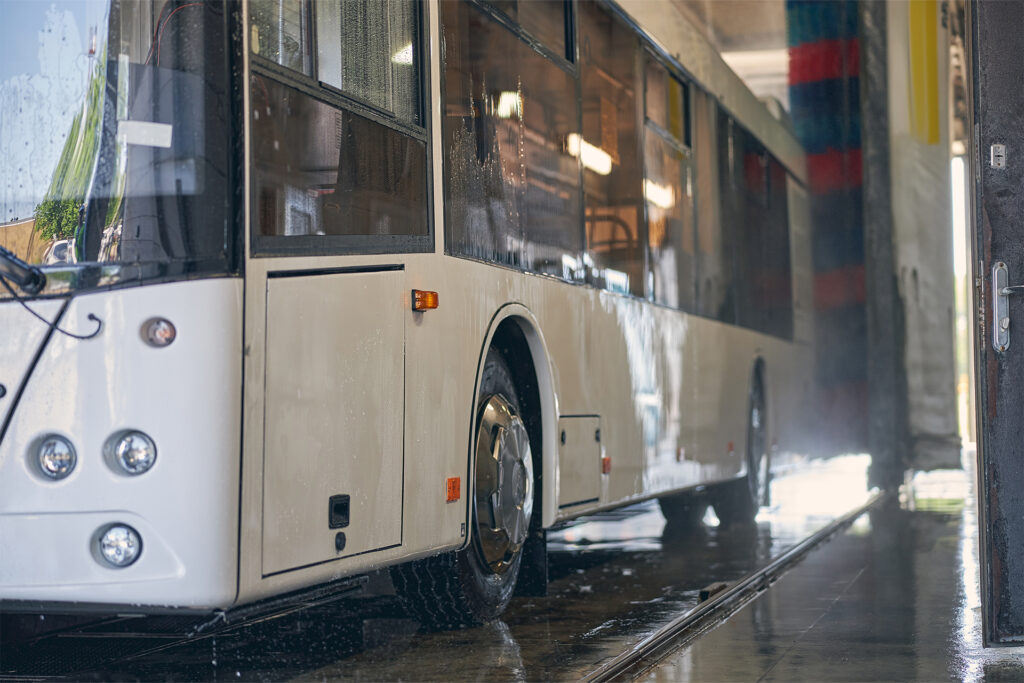
These larger, stationary systems are ideal for vast fleets, with dedicated storage space at the depot. Highly effective at removing grime, they provide an all-over deep clean at a fraction of time it takes to achieve the same results manually. Do note that you might need to pair this with a pressure washer in the case of especially stubborn dirt.
How Automation is an Efficiency Engine: Manual vs Automatic
For those still uncertain of which way you sway – towards manual cleaning or automation – allow me to compare both methods side by side.
| Factor | Manual Bus Washing | Automated Bus Washing |
| Time required | Can take 30–60+ minutes per vehicle depending on size and level of dirt. | Cleans vehicles in just a few minutes, helping maximise fleet availability. |
| Cleaning consistency | Results can vary depending on the operator, technique and time available. | Delivers a consistent, repeatable clean across every vehicle. |
| Labour requirements | Requires more staff time and physical effort, particularly for larger fleets. | Reduces manual labour, allowing staff to focus on other operational tasks. |
| Cleaning quality | Effective when carried out thoroughly but hard-to-reach areas may be missed. | Designed to clean large surface areas evenly, including difficult-to-reach sections. |
| Running costs | Lower upfront costs but higher ongoing labour costs for frequent cleaning. | Higher initial investment but can reduce long-term labour and operating costs for busy fleets. |
| Water usage | Water consumption can vary depending on the operator and equipment used. | Many modern systems are designed to use water efficiently and can be paired with water recycling systems. |
| Health & safety | Greater risk of slips, manual handling injuries and working at height if proper procedures aren’t followed. | Minimises manual cleaning tasks and reduces the need to work at height, improving overall safety. |
| Best suited for | Small fleets, occasional cleaning or businesses with limited budgets. | Medium to large fleets, operators with frequent cleaning requirements or high vehicle turnover. |
| Scalability | Becomes increasingly time-consuming as fleet size grows. | Easily accommodates growing fleets and higher cleaning volumes. |
| Long-term value | Suitable for lower-demand operations but can become less efficient over time. | Offers a faster, more consistent and cost-effective solution for organisations cleaning buses regularly. |
Bus Washing Mistakes that Could Be Quietly Costing You
Besides overlooking the power of automation, many transport firms are unaware that they’re missing out on easy cost savings through their cleaning logistics. Working with numerous bus companies, I’m privy to some of the stumbling blocks the sector can come up against. To sidestep them yourself, take stock of these common confessions.
- Using the wrong cleaning products: Some cleaning products are simply not meant for commercial purposes. Ensure your staff use something bus-appropriate and follow the manufacturer’s instructions for use.
- Skipping the pre-rinse: Trust me, I understand the adrenaline-pumping pressure of tight turnarounds, but missing the pre-rinse is more hassle than it’s worth. Applying detergent directly to a dirty vehicle can drag debris across the paintwork as staff brush the body. You know what that means: scratches and swirl marks.
- Cutting corners with hard-to-reach areas: Visible body panels often receive the most attention, whilst wheel arches, roofs, chassis and the spots around mirrors go neglected. Really, they ought to be incorporated into everyday cleaning routines.
- Cleaning in direct sunlight or at peak temperatures: This is arguably one of the most overlooked blunders: washing your buses under the beating sun has let the suddy water dry so quickly, you’re left with a vehicle covered in streaks and “white spots” of hard water deposits. Not the professional look.
- Using excessive water pressure: Oftentimes, staff veer too far into high-pressure territory with their cleaning equipment. Of course, they’re an excellent salve for stubborn dirt, but don’t let this be at the detriment of the paintwork.
Settle on the Right Solution for Your Fleet
We’re in the business of finding transport providers their goldilocks solution, not a near-fit. If that’s exactly what you’re looking for, here is a series of questions we often ask our clients.
- How much budget is at your disposal? Considering the cost, are vehicle cleaning systems a possibility? If so, how many machines per vehicle is a realistic compromise?
- What’s your ideal convenience to cost ratio? The key is finding the sweet spot between expenses and maximising those all-important efficiencies.
- …Speaking of, would hiring be of interest over purchasing the kit outright?
- How large is your fleet? And what is your estimated daily throughput?
- What’s your current water/drainage spend? With the aid of an Iteco machine, for example, could you offset those costs?
- Is sustainability a priority? In that case, manual bus washing might be worth phasing out in favour of a more controlled solution.
- What are your bottom-line maintenance requirements and cleaning standards? An automated or semi-automated system can help your team weed out some of the human error.
- Lastly, think about the available space you have for routine maintenance: is there space for large machinery or is something petite more appropriate?
Unsure? We offer free consultations to help you get to grips with the kit and whittle down your options. You need only get in touch.
Conclusion: Bus Wash Systems are the Future of Transport, Many Simply Don’t Know It Yet
The moral of the story: why not automate this simple part of your bus upkeep to make maintenance manageable? It’s many birds one stone; you improve customer experience, drive down costs, maintain a positive brand image, and keep more vehicles on the road, for longer.
It sounds like a tricky feat, I know, but with the right equipment in tow, you can fold the process into your existing logistics with little friction to speak of.
Now, are you ready to explore the solutions? From mobile bus wash stations to more conventional rollover stands, there’s a setup out there to suit your scenario. You just need to head out there and find it.
If you need help figuring out your strategy or refining your shortlist, the Harrison Hire & Sales team is on hand to assist.
Frequently Asked Questions
How Often Should Buses Be Cleaned?
The ideal cleaning schedule depends on how frequently your buses are used and the conditions they operate in. Many operators clean exteriors daily or several times a week, while interiors should be cleaned after each shift to maintain hygiene and provide a positive passenger experience.
What Equipment Is Needed for Effective Bus Cleaning?
The right equipment typically includes a pressure washer, soft-bristled brushes, commercial vehicle cleaning detergents and suitable PPE. Larger fleets may also benefit from automated bus wash machines, which can provide faster, more consistent cleaning while reducing manual labour.
Is Manual Bus Cleaning Better Than Using an Automated Wash System?
Manual cleaning can be effective for smaller fleets or occasional washing, but automated systems are often a more efficient option for businesses cleaning multiple buses each day. They deliver consistent results, reduce labour requirements and can help lower long-term operating costs.
Can Frequent Washing Damage a Bus?
Regular washing should not damage a bus when the correct techniques, equipment and cleaning products are used. In fact, removing road salt, dirt and other contaminants helps protect paintwork, reduce corrosion and prolong the life of the vehicle.
What Should I Look for When Choosing a Bus Wash System?
When selecting a bus wash system, consider factors such as your fleet size, the number of vehicles cleaned each day, available space, water efficiency and long-term operating costs. Choosing a solution that matches your operational requirements can improve cleaning consistency while helping to maximise vehicle uptime.